What Are We Learning About Women's Resilience in a Changing Climate?
The 16 Days of Activism against Gender-Based Violence (GBV) asks hard questions of everyone, including climate projects like ours. Our work does not respond to individual cases of violence. It does shape who receives information and income, and whose priorities influence decisions when floods and fires disrupt lives. So we are using this moment to look honestly at what we are learning, and what we do not yet know.
When a flood hits Pontianak, a woman can see her livelihood disrupted in just a few hours. In mangrove and peatland communities, environmental change can move more slowly while wearing down the resources families depend on. In both places, resilience calls for resources, clear information and a real seat at the table. These principles guide FINCAPES' work across Indonesia.
In Pontianak, flood preparedness and disaster financing can help women protect their livelihoods and recover from disruption. In mangrove and peatland communities, support for women-led enterprises can strengthen their economic choices and influence.
The conditions that shape women’s socio-economic resilience can also affect their safety. Violence against women is never justified and is shaped by unequal gender and power relations. Evidence suggests that disasters can heighten the risk of violence, with economic insecurity among the pathways identified (Thurston, Stöckl and Ranganathan, 2021). Emerging evidence also suggests that climate change and environmental degradation may be increasing it (Fapohunda et al., 2025).
For FINCAPES, this means examining how climate risks affect women’s livelihoods and whether preparedness and recovery systems reflect those realities. In Pontianak, that work includes looking beyond visible flood damage and asking whether warnings give people the information and means to act.
Conventional disaster assessments often focus on ruined buildings and damaged infrastructure. They can miss less visible effects, such as interrupted informal income and added unpaid care work, which often falls on women. In Pontianak, FINCAPES is supporting an ongoing actuarial study, led by Universitas Gadjah Mada, to better understand what floods could cost. Preliminary findings address one visible part: potential direct losses to public and government assets (Read more: Measuring What Flooding Could Cost Pontianak). The study plans to examine disruption to informal workers, home-based businesses and microenterprises, alongside increased care responsibilities. Differences in how women and men experience these losses have also yet to be fully measured. This work matters because when disaster planning overlooks how people live and work, recovery support may miss those who need it.
That same blind spot shows up in disaster warnings and financing. FINCAPES is developing low-cost early warning tools with the needs of women, older residents and people with disabilities in view. Testing is under way, but formal piloting is still ahead. Receiving a warning is only the first step: people may also need transport, money or physical support to evacuate safely.
Preparing for Floods and Fires: Work in Progress
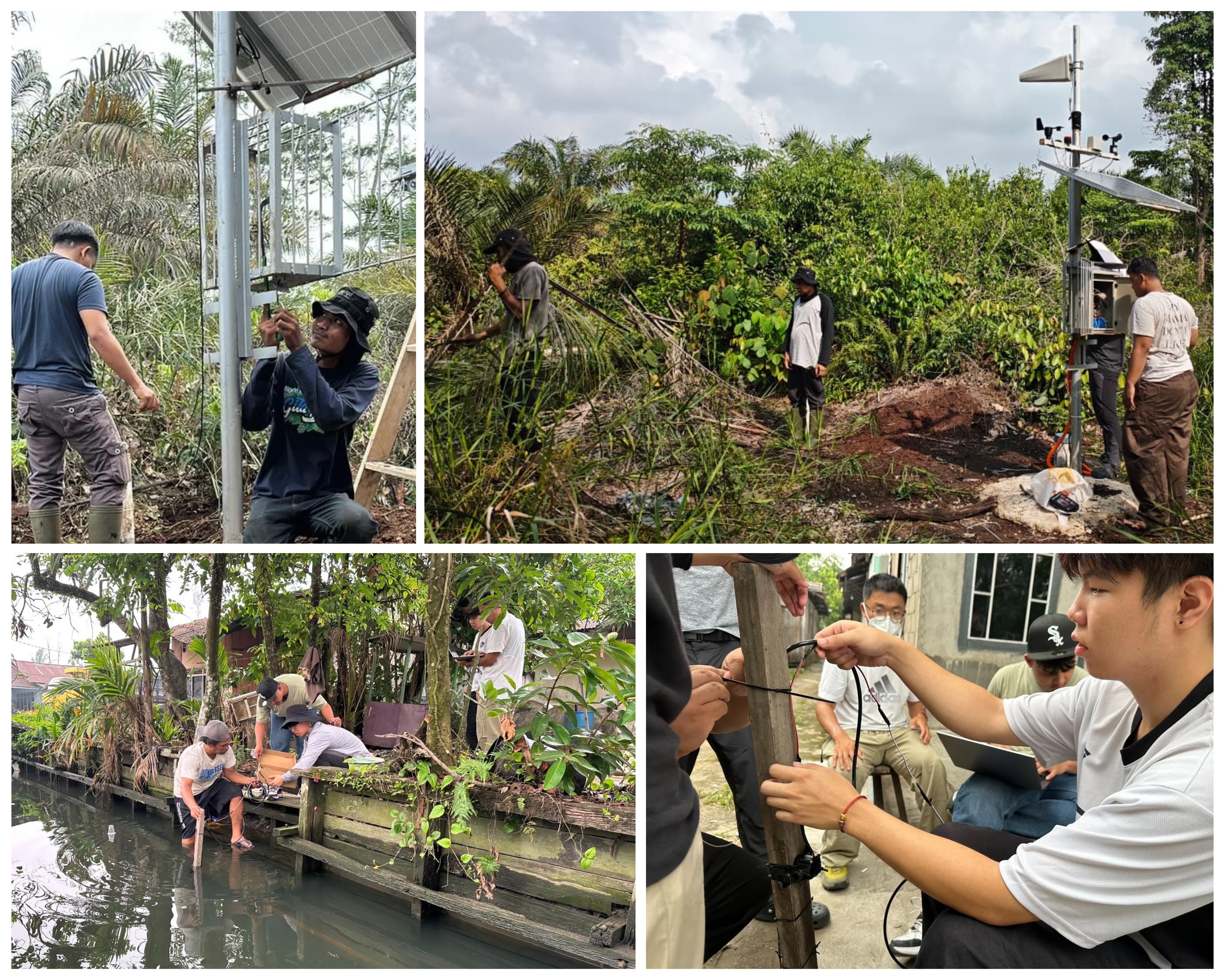
FINCAPES is developing an affordable, community-based early warning system for floods and peatland fires. It considers the needs of women, older people and people with disabilities, who may need accessible information or extra time and support to evacuate.
- Top: Sungai Gelam, Jambi - Three fire monitoring stations were installed in August 2026.
- Bottom: Pontianak, West Kalimantan - Students from the University of Waterloo and Universitas Tanjungpura (UNTAN) conducted Flood EWS sensor testing as part of the community-based flood early warning system development. University of Waterloo students lead software development. Indonesian interns, working with local partners, support hardware and sensors, building skills to operate and maintain the system.
The timing and reach of financing matter. Informed in part by the actuarial study, FINCAPES' five-step Risk-to-Finance Framework matches different levels of flood risk with options such as contingency reserves, pre-arranged financing and insurance. Pre-arranged funds protect people only if they reach them, including women whose informal work and unpaid care rarely appear in loss data or recovery schemes. As one step, the FINCAPES DRFI study proposes a five-step Risk-to-Finance Framework, which connects detailed flood information with advance plans to finance different levels of risk. The policy brief also asks that equity and social vulnerability be built into the design. How funds will reach women is a question still to be worked through. (Read more: DRFI Policy brief).
Recovery is only part of resilience.
Women's ability to cope with the next disruption also depends on the livelihoods, resources and decision-making power they have before it arrives. Income and skills can widen women’s choices, but they do not by themselves prevent violence or guarantee control over resources. We must pay attention to how benefits and decision-making power are shared, and whether women can access support when they face harm.
In Indonesia’s mangrove and peatland communities, that means asking who manages local resources and who gets a voice in community development. Women contribute to mangrove and peatland livelihoods through work such as nurseries, processing and home-based enterprises. Yet they remain underrepresented in formal decision-making, including the governance of natural resources.
To widen women's participation, FINCAPES is supporting targeted, ground-level initiatives across three key sites. In mangrove communities, FINCAPES works in Muara Sekampung (Lampung) to strengthen the capacity of the SELASIH field school as a space for peer learning around mangrove conservation and sustainable livelihoods.
SELASIH: Learning Toward a Stronger Voice
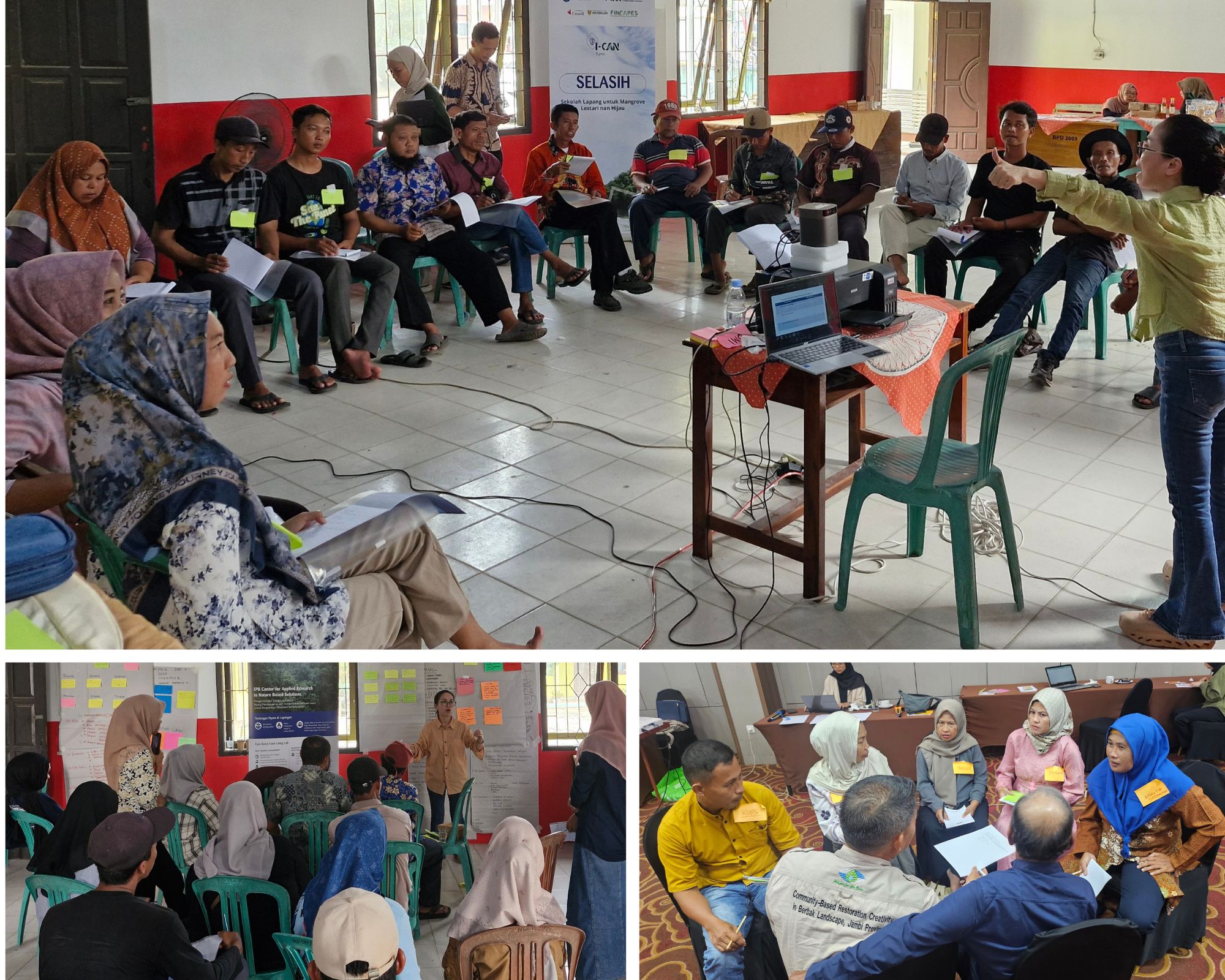
In Muara Sekampung, Lampung, SELASIH is being developed as a gender-responsive, peer-learning field school connecting mangrove conservation with sustainable livelihoods. FINCAPES supports IPB Center for Applied Research in Nature-based Solutions (I-CAN) in strengthening this work.
- Gender-responsive Training of Trainers (ToT): SELASIH delivered training on three linked areas: ecotourism and silvofishery, mangrove-derived products, and institutional strengthening for Forest Farmer Groups (KTH), Social Forestry Business Groups (KUPS), and Women’s Farmer Groups (KWT). The purpose is to ensure livelihoods support, rather than undermine, mangrove conservation.
- Mangrove-based business-model ToT in Lampung was held in May 2026 with 31 participants (14 women, 17 men).
- A training on mangrove-friendly fish farming was held in Lampung on 25 July 2026 for 42 participants (9 women, 33 men).
- Business coaching across five villages: Coaching identified six priority products and common needs in packaging, legal compliance, product costing, and marketing. The next coaching phase is to connect upstream silvofishery with downstream processing and markets. Milkfish and vannamei shrimp were selected as priority commodities, and I-CAN is engaging potential buyers.
Running alongside it, an inclusive silvofishery pilot tests upgraded pond designs, water circulation, and mangrove layouts while tracking whether economic gains are shared fairly among women, youth, processors, and lower-income families.
In Pangkal Babu (Jambi), enterprise efforts center on conservation-friendly business, from launching the Permata women’s group to practical training in eco-printing, honey production, and mangrove snacks.
Growing Local Capacity for Mangrove Livelihoods
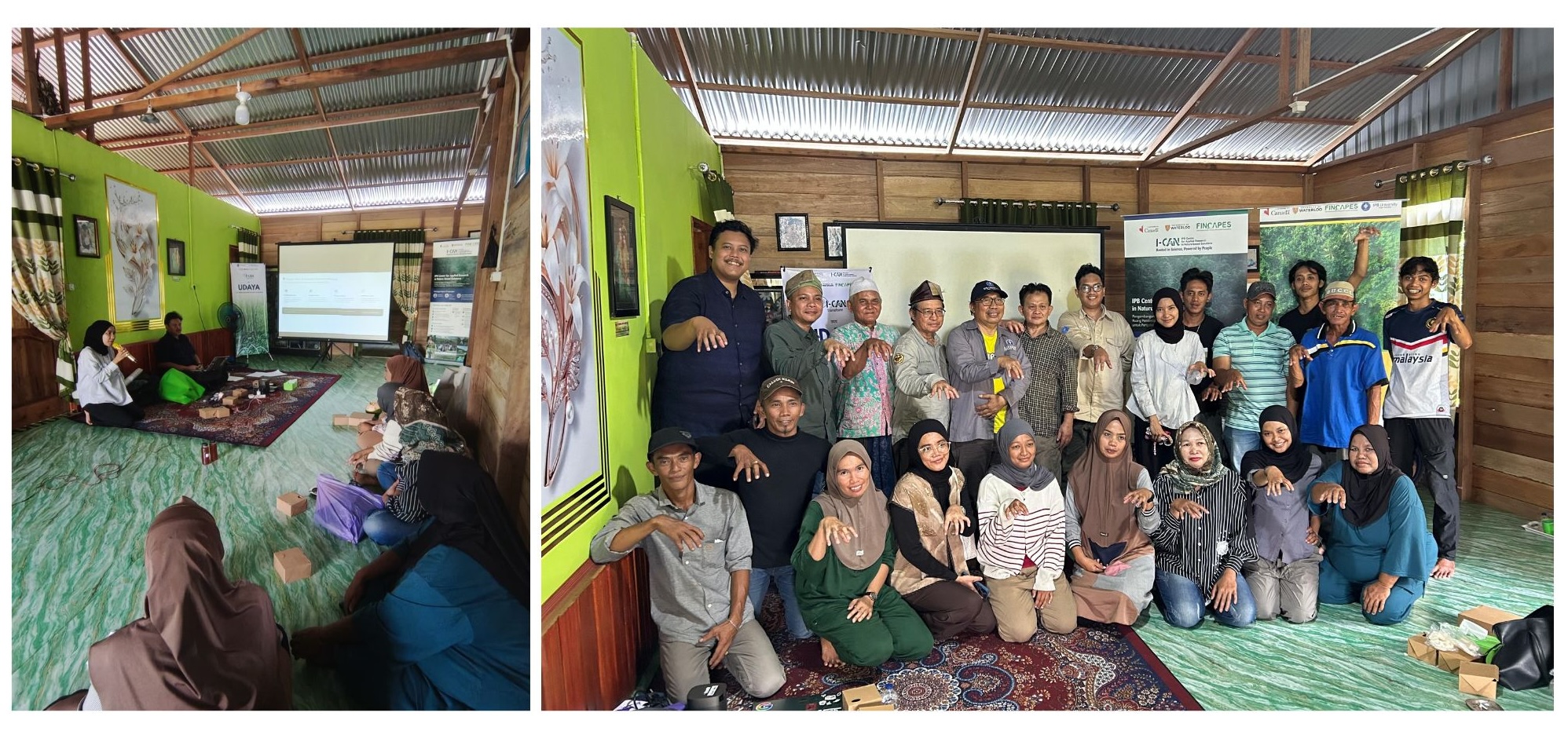
Participants take part in the Gender-Responsive Mangrove-Based Business Model Training of Trainers (ToT) in Jambi, held early June 2026. The training brought together 25 local facilitators, 11 women and 14 men, as part of FINCAPES' work to build capacity for mangrove livelihoods that respond to gender needs and support conservation in Jambi, including Pangkal Babu.
In peatland communities, FINCAPES’ work on peatland restoration in Sungai Gelam ties agroforestry directly to women’s leadership coaching and technical training in high-value crop processing, like pineapple products.
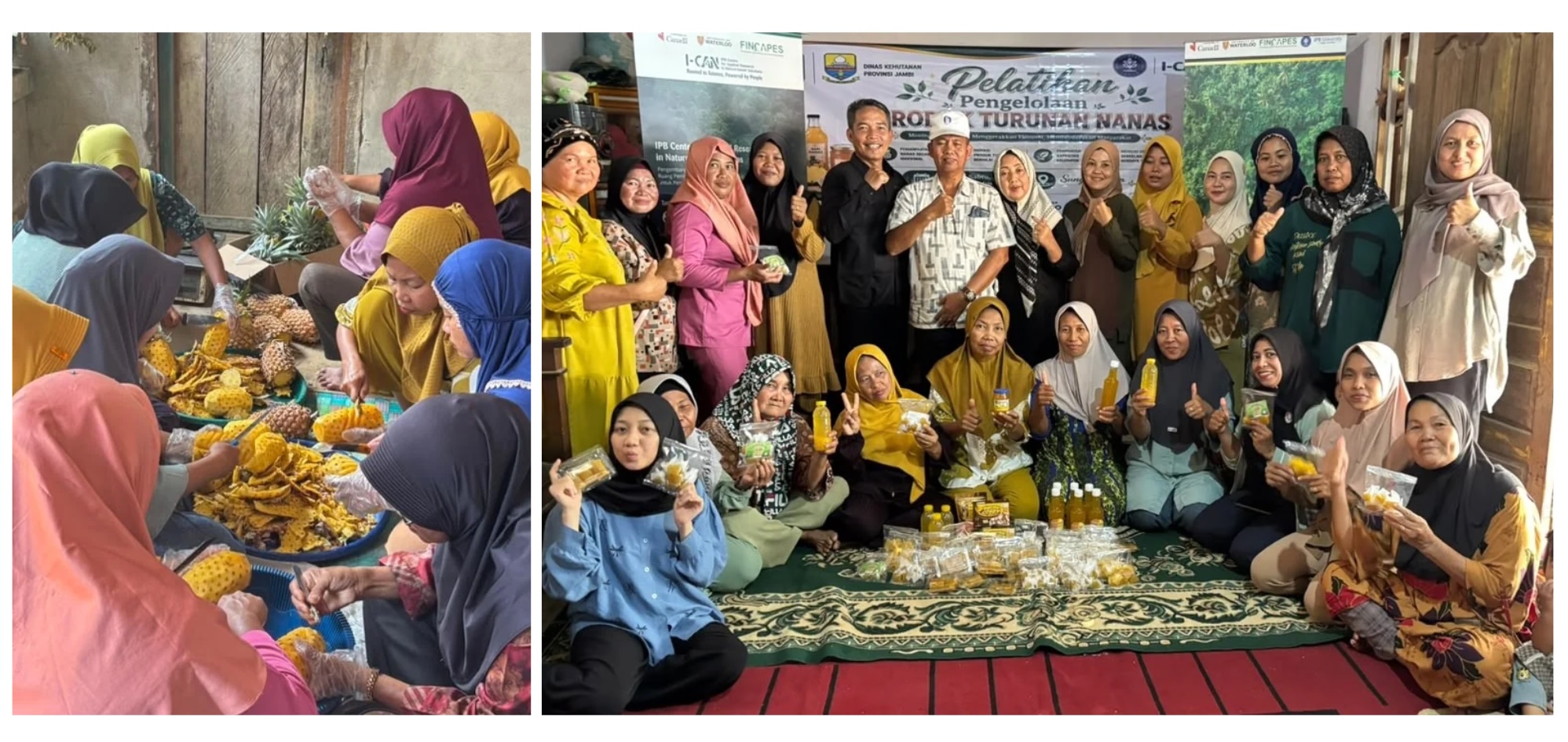
Adding Value to Peatland-Grown Pineapple
Nineteen women took part in practical pineapple-processing training in Sungai Gelam, Muaro Jambi, in August 2026. They learned to make jam, syrup and traditional snacks, alongside hygiene, food safety and packaging. The training supports women's economic participation, including through the KWT Cemara Women Farmers Group, as part of FINCAPES' work connecting peatland restoration with sustainable livelihoods.
A training session can end with a new skill. What happens next matters more: can a woman use it to reach new markets, secure resources and influence local choices?
Getting there is not always easy. Women have pointed to childcare duties, rigid training schedules and social pressure in mixed-gender spaces. Smaller, village-based workshops with practical field exercises have been proposed to help.
So we cannot measure progress by headcount alone. We need to see whether women's voices shape decisions, their enterprises grow, and gains and control over resources are shared fairly. Following these changes can show what works, and where capital, market access or time still hold women back.
Looking ahead
From preparing for floods in Pontianak to supporting small businesses in coastal mangrove and peatland communities, FINCAPES is working toward a broader idea of resilience: helping women do more than get through a crisis. That means making sure they have the tools, information, and resources to act, and a meaningful say in recovery and local livelihoods.
There is still much to learn. FINCAPES and its partners will need to see whether early warnings reach the women they are meant to serve, build a clearer picture of losses that often go uncounted, and find out whether training leads to greater influence and a fair share of economic gains.
In a changing climate, resilience takes shape when women have the safety, support, and resources to protect their livelihoods, recover on their own terms, and help shape what happens next.