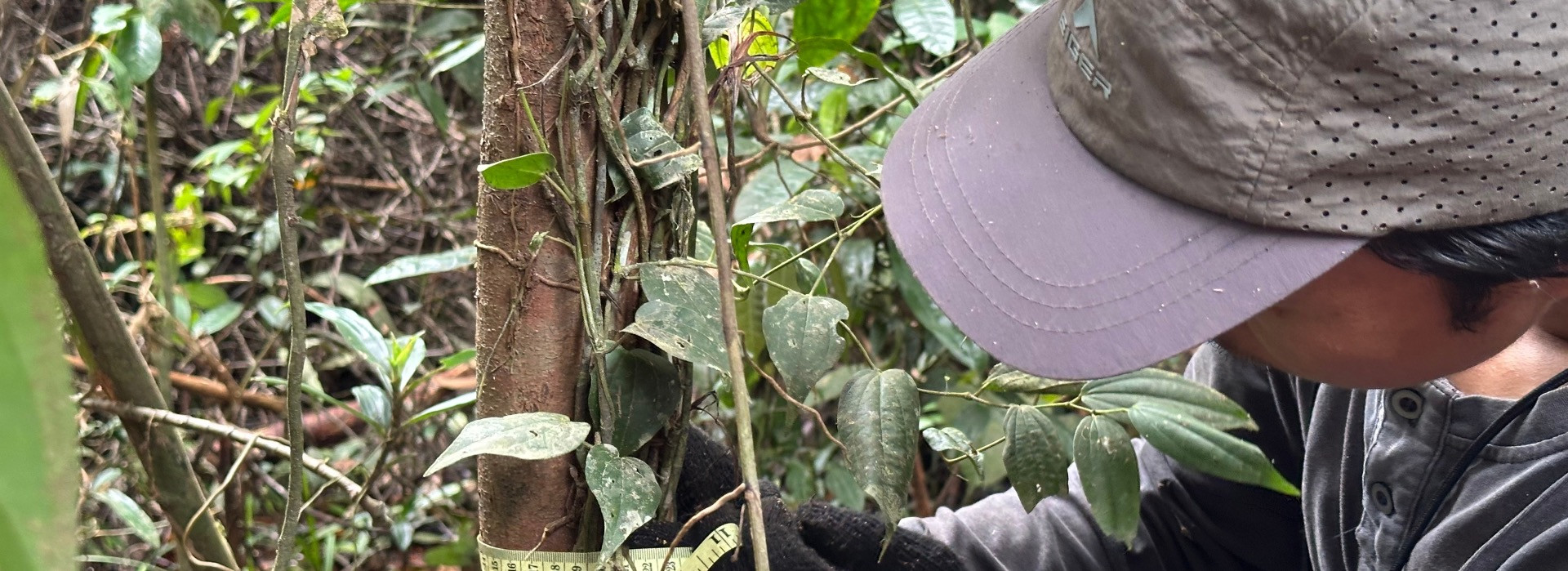
FINCAPES WORK-INTEGRATED LEARNING: Skills for a Shared Future
FINCAPES’s approach to climate resilience is not built around a single technology. It is built around partnership: bringing together Canadian and Indonesian students to develop practical solutions, strengthen local institutions, and connect technological innovation with the restoration of the landscapes that protect communities from climate risks.
In Muaro Jambi, the dry season announces itself in the soil before it reaches the sky. Weeks before smoke becomes visible over the peatland, moisture levels can begin to fall, providing an early indication that fire risk is increasing.
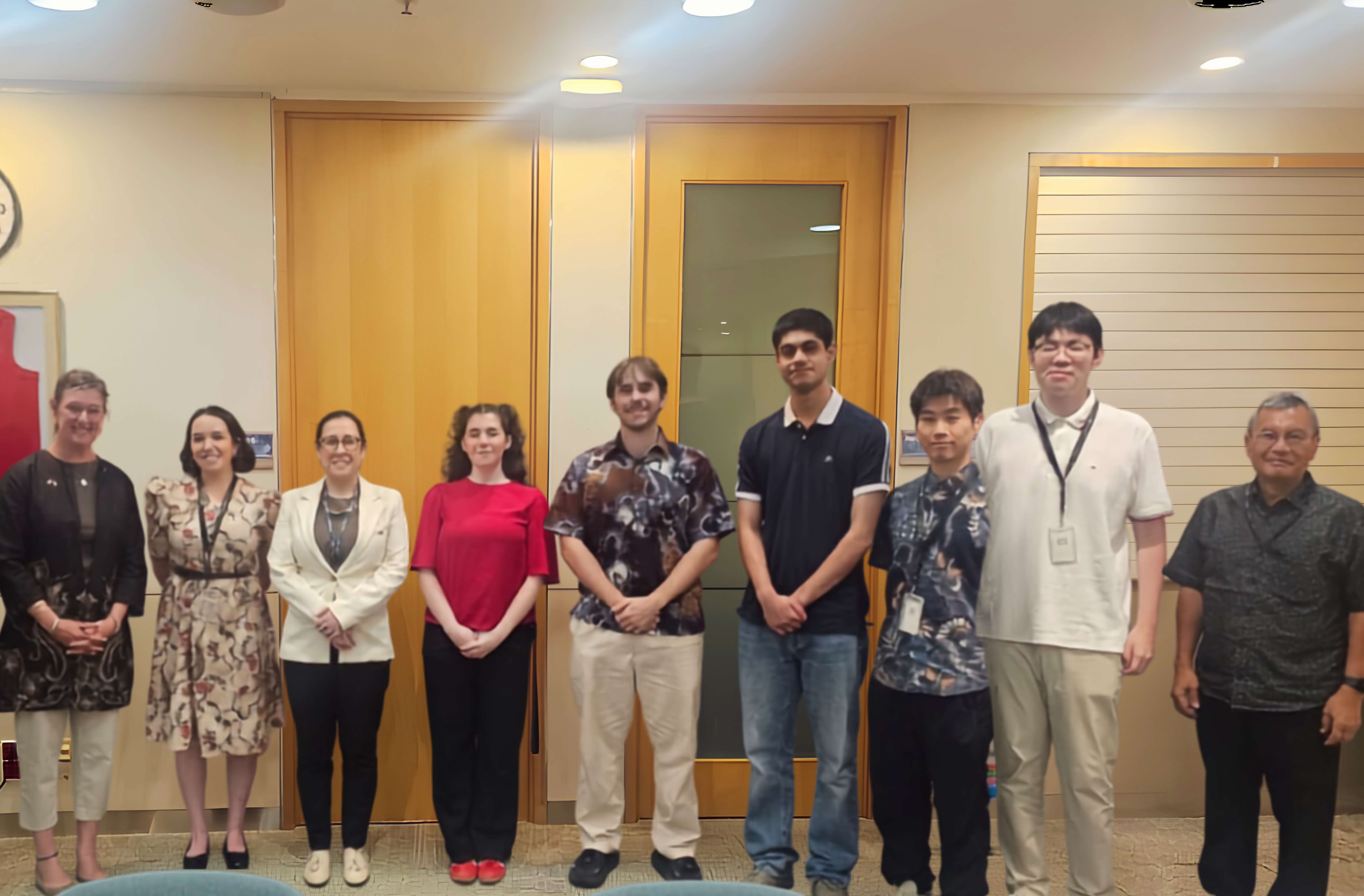
University of Waterloo co-op students with team member from Canadian Embassy in Jakarta
To detect these changes earlier, FINCAPES is developing a small solar-powered monitoring station in Muaro Jambi. The DIY Fire Early Warning System uses sensors to track indicators such as soil moisture, temperature, humidity, rainfall, wind, water level, smoke, and air quality. The station is one part of the wider DIY Flood and Fire Early Warning System, or DIY FFEWS, being developed collaboratively by co-op students from the University of Waterloo and student interns from Indonesian universities under the Canada-funded FINCAPES project.
This collaboration is part of FINCAPES’s Work-Integrated Learning, or WIL, program, which places students in real project assignments where academic knowledge is applied to practical climate challenges as they contribute directly to research, technology development, field monitoring, community engagement, and knowledge products alongside universities, government institutions, and local partners.
While the DIY FFEWS helps communities recognize danger as environmental conditions change, other interns are supporting the longer-term work of restoring landscapes that can reduce fire, flood, and coastal risks in the first place. Along mangrove landscape in Lampung’s eastern coast and Jambi, as well as in the peatland landscapes in Jambi, interns are contributing to an equally important form of risk reduction. They support restoration frameworks and monitoring tools to assess whether mangrove and peatland conditions, while also supporting trainings, workshops, and focus group discussions with local communities.
Since May 2025, a total of 28 interns, 12 from the University of Waterloo and 16 from seven Indonesian universities, have worked across the FINCAPES Project components on Nature-based Solutions (NbS), flood risk, and climate finance. Fifteen placements have been completed and 13 are ongoing. Their contributions show how WIL links immediate risk detection with the longer-term work of restoring landscapes and strengthening local capacity.
An Early Warning System Built to Answer a Local Problem
Early warning systems are most valuable where risk is high, but they are often hardest to operate in places with unreliable electricity, limited connectivity, and restricted access to technical maintenance. Many commercial systems are costly, centrally managed, and dependent on infrastructure and specialist support that may not be readily available in rural or peatland areas.
The DIY FFEWS, is being developed based on the premise that an early warning system should be affordable, adaptable, and maintainable by the institutions and communities that use it. Pilot flood systems are being developed for Pontianak in West Kalimantan and Samarinda in East Kalimantan, while a fire early warning system is being developed for the peatland restoration area in Muaro Jambi.
The station combines low-cost environmental sensors with a Raspberry Pi-based controller, solar power, battery backup, and 4G communication. Flood-monitoring stations can track indicators such as river level, rainfall, flow, water pressure, and soil moisture. The fire-monitoring station can track soil moisture, temperature, humidity, rainfall, wind, water level, smoke, and air quality, conditions that help indicate when peatland fire risk is rising.
Using several indicators provides a fuller picture of changing environmental conditions and can help reduce false alarms caused by isolated or inaccurate readings. The system is also modular, allowing additional sensors or monitoring points to be added as local needs evolve rather than locking users into a fixed commercial package.
The system brings together complementary technical and field-based expertise. University of Waterloo students lead its digital development, including the cloud backend, data APIs, dashboards, automated alerts, and cybersecurity. Indonesian interns contribute to hardware assembly, sensor integration, solar installation, site assessment, calibration, and field testing. Interns from Universitas Prasetiya Mulya have played an important role in hardware development, while local university partners contribute knowledge of the environmental and institutional conditions at each pilot site.
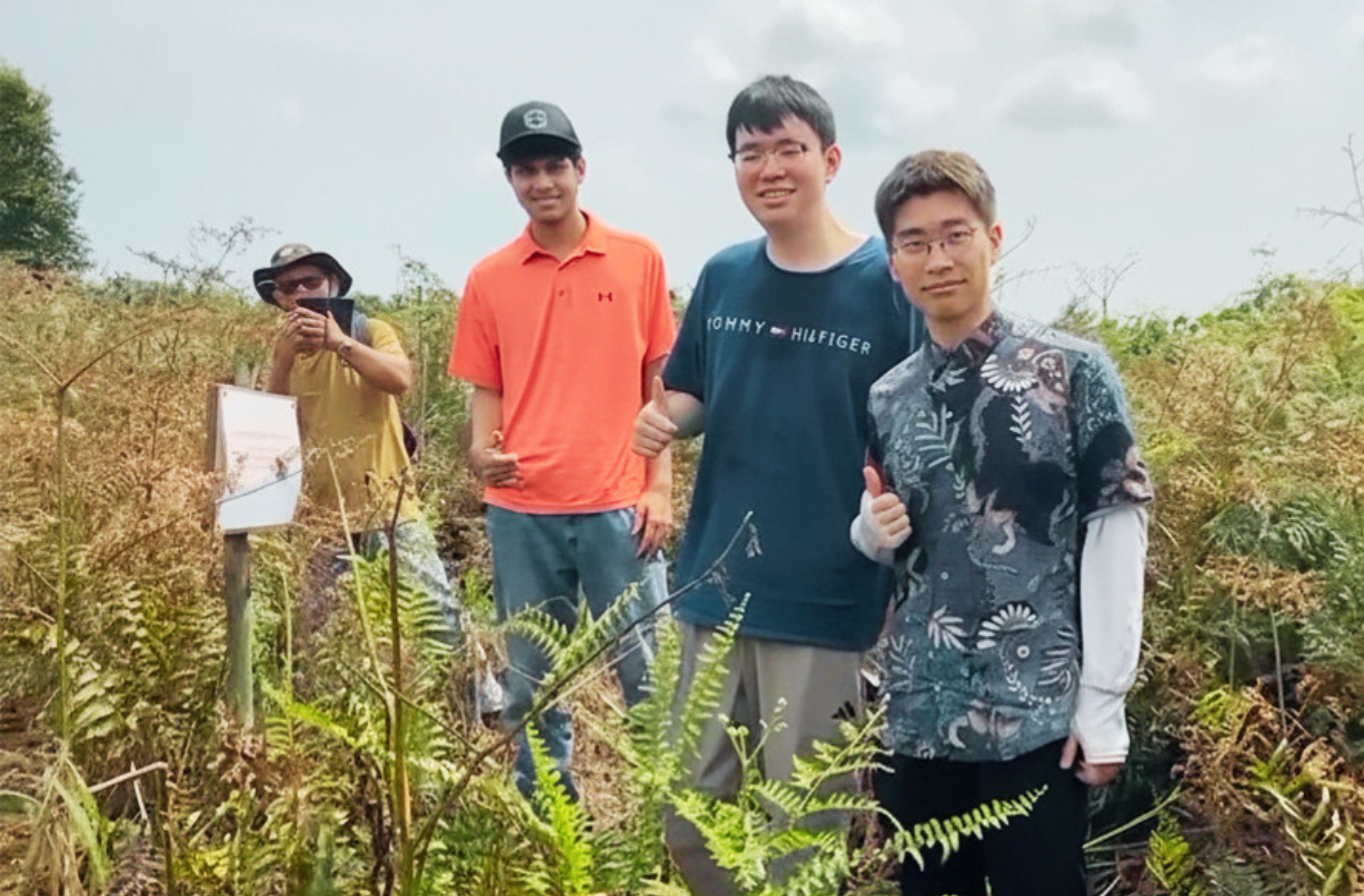
Peatland Expert from IPB University, accompanied by the University of Waterloo co-op students,
conducted field testing of environmental monitoring equipment at a peatland restoration site in
Sungai Gelam, Jambi
“Working on the FINCAPES project has been an incredible experience. Collaborating with Indonesian students allowed us to combine our strengths: while we built the cloud backend and data APIs, they brought essential hardware expertise and field insights. Applying engineering to a real-world climate project taught me that tech innovation is just as much about teamwork and problem-solving as it is about writing code. It’s incredibly rewarding to know our work helps protect local communities.”
— Cheng Fang, University of Waterloo“Building and testing the early warning system in the field was a completely different experience from learning about the technology in class. We had to work through real conditions, solve problems as they emerged, and make sure the hardware could connect with the system developed by the Canadian students. The experience strengthened our technical skills, but it also taught us how important communication, patience, and teamwork are when building something that communities may eventually rely on.”
— Arinata and Kresna, Universitas Prasetiya Mulya
In this collaboration, the information gathered during field testing shapes how the digital platform is designed, while the platform’s requirements influence how sensors are configured, calibrated, and connected. Both sides must work together to turn separate components into a functioning system suited to local conditions.
“Working with Indonesian students has shown me how different perspectives can lead to better solutions. We combine technical knowledge, local experience, and different approaches to problem-solving.”
— Jinkai Chen, University of Waterloo“One of the most rewarding parts of this project has been collaborating with students from Indonesia who bring invaluable local knowledge and perspectives. Together, we’ve combined our strengths to build a practical early warning system, and I’ve gained a much deeper appreciation for how engineering can create meaningful impact beyond the classroom.”
— Aaryan Malhotra, University of Waterloo
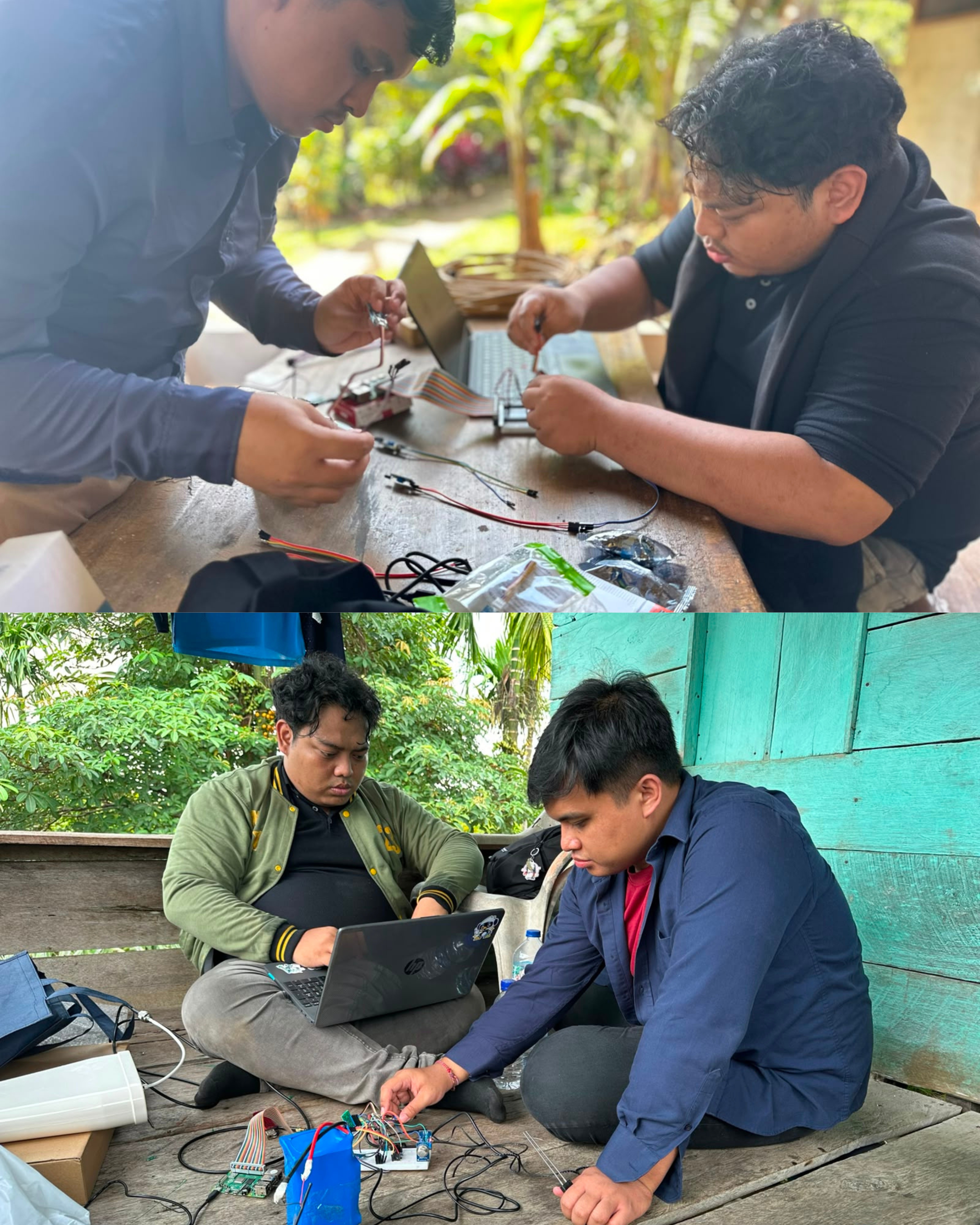
Two Indonesian student interns from Universitas Prasetya Mulya assemble and test electronic components
for an environmental monitoring system at a worktable.
Once deployed, the stations are intended to be operated and sustained by Indonesian institutions in collaboration with partner universities, relevant government agencies, village leaders, and local stakeholders. BMKG, BPBD, and other authorized users can use the monitoring platform to review environmental conditions, track trends, and support preparedness and warning decisions. Partner universities can contribute the technical capacity needed to maintain equipment, review data quality, recalibrate sensors, and adapt or expand the system as conditions and local needs change.
Communities also have an important role. Their knowledge can help determine where stations should be installed, how warnings should be communicated, and what practical actions should follow an alert.
The long-term success of DIY FFEWS will be measured not only by the accuracy and reliability of the pilot systems, but also by the ability of institutions in Pontianak, Samarinda, and Muaro Jambi to operate, maintain, adapt, and ultimately expand the technology.
Restoring the Landscapes That Reduce Risk
While the DIY FFEWS is designed to give communities more time when danger is rising, FINCAPES’s NbS work addresses the same risks over a longer horizon. It supports the restoration of mangroves and peatlands that can reduce coastal erosion, flooding, and fire risk. The NbS work currently covers 20 hectares of replanted mangroves in Muara Sekampung, Lampung, and nine hectares of replanted peatland in Sungai Gelam, Jambi, with planned expansion to the peatlands of Sungai Buluh and the mangroves of Pangkal Babu, Jambi.
The FINCAPES Project' NbS component is the WIL program’s largest area of activity, engaging 17 of the 28 interns who have participated since May 2025. Their work includes helping develop ecological restoration frameworks and practical monitoring tools to track changes at the sites. By documenting field conditions, interns contribute evidence that can inform adjustments to restoration methods over time.
Community knowledge is an important part of the process. Their understanding of tides, seasonal flooding, vegetation, livelihoods, and land-use history helps inform site selection, restoration methods, monitoring priorities, and the practical indicators used to assess progress in each landscape. FINCAPES works with 15 community groups representing approximately 427 members, seven groups in Jambi and eight in Lampung. The students work to support trainings, workshops, and focus group discussions where technical observations are discussed alongside community experience, helping ensure that restoration activities remain relevant to local conditions and capacities.
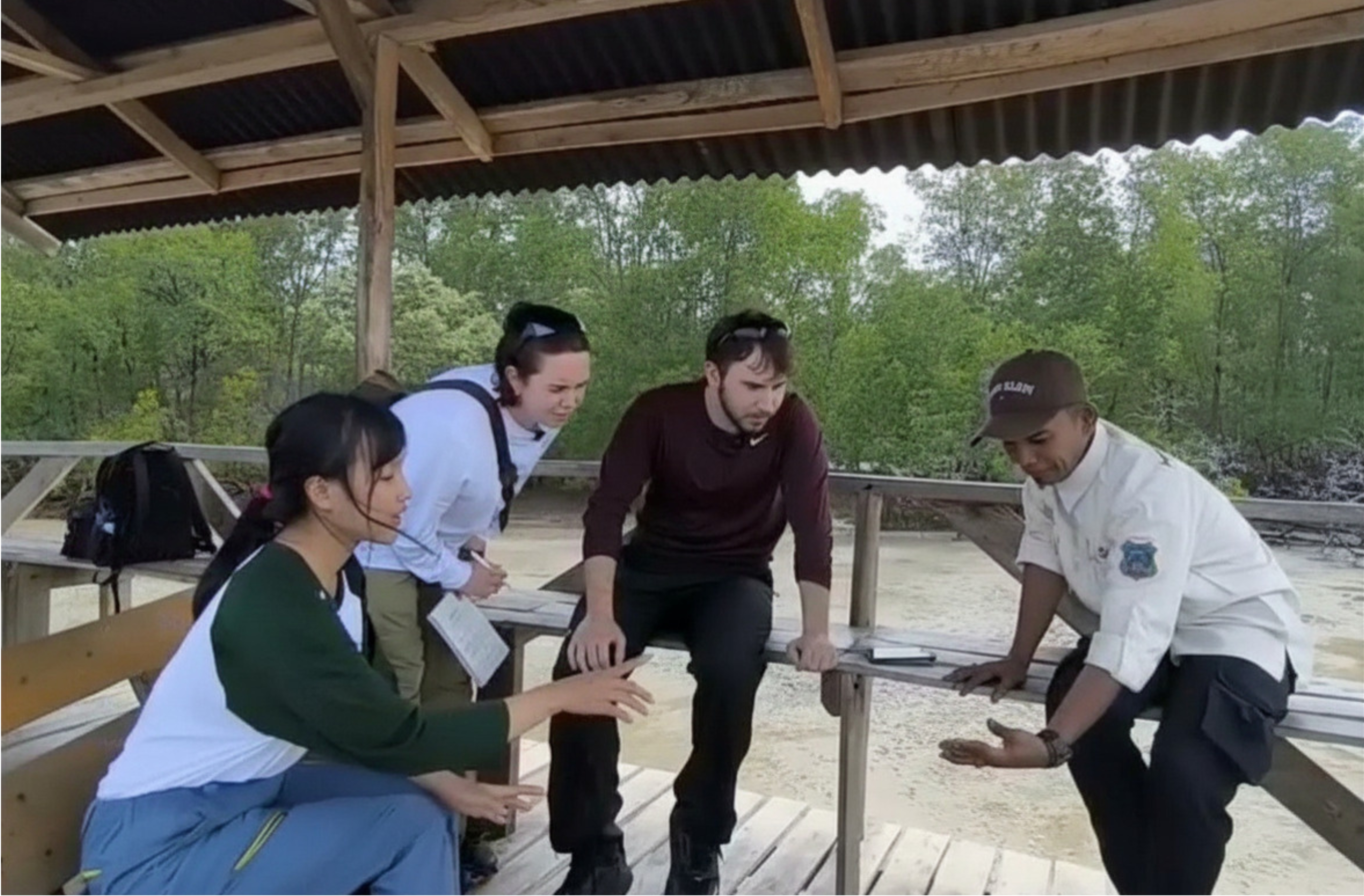
Abby & Michael from University of Waterloo (Center) discuss field observations with a local researcher
at a mangrove site in Pangkal Babu, Jambi
“My work at FINCAPES focuses on proposal writing, including researching potential donors and strengthening our work packages. During a recent trip to the Pangkal Babu mangroves, I had the opportunity to witness firsthand how community members respond to adversity with resilience. A boat used for ecotourism activities, including sightseeing and fishing tours, had broken down. Instead of waiting for funding to arrive, the community rebuilt it using resources provided by the surrounding mangrove ecosystem. Their determination to thrive is unwavering; despite a lack of support, they refuse to be derailed by setbacks. As I continue writing proposals, I bear in mind the gap between the community's potential and the resources available to realize it, a gap I hope to help bridge."
— Michael Amatuzio, University of Waterloo
Supported by IPB University through IPB Centre for Applied Research in Nature-based Solutions (I-CAN), Universitas Jambi, and ITERA, interns help connect university research with field implementation and community experience.
“My experience in Pangkal Babu challenged how I think about community. Mangrove restoration may take place in one village, but the pressures on the landscape—and the benefits of protecting it—extend far beyond local boundaries. As a Canadian researcher working in Indonesia, I learned that responding to climate change requires collaboration not only across countries, but also across neighbouring communities whose livelihoods and environments are closely connected.”
— Abby Dooks, University of Waterloo
An early warning system may provide hours or days to prepare. Healthy mangroves and wetter peatlands can reduce vulnerability over years by stabilizing coastlines, retaining water, lowering fire risk, protecting biodiversity, and sustaining local livelihoods.
Connecting Skills, Systems, and Landscapes
FINCAPES’s WIL program shows that student placements can contribute far beyond individual learning. Interns support system development, institutional capacity, and practical implementation by documenting environmental change, refining restoration approaches, strengthening community participation, and translating university research into action on the ground. In doing so, they help build the local ownership and technical expertise needed to sustain these efforts beyond the placement period.
By connecting Canadian and Indonesian students with universities, government institutions, and communities, the program supports locally appropriate early warning systems alongside mangrove and peatland restoration.
These efforts are closely linked. Building resilience to floods and fires requires both the capacity to recognize and respond to risks early and the long-term restoration of landscapes that help reduce those risks. WIL connects these priorities through applied learning, collaboration, and local ownership.
Its purpose is therefore not only to prepare students for future careers, but also to strengthen the systems, institutions, and partnerships already responding to climate risk.